In this article
Start with a page, not a product.
You do not need to build anything to find out if people want it. You need a headline, a clear promise, and a way to count who says yes. Landing page builders are the first test instrument most solopreneurs reach for. The question is not which one has the most features. It is which one you can actually ship in an afternoon and read honest results from.
Before you build any page, make sure you have run a basic idea evaluation first. A landing page measures whether your framing works, not whether the idea itself is worth pursuing. If you have not done the evaluation step yet, How to Evaluate a Business Idea Before You Build Anything walks you through it.
A validation landing page has one job: present a promise to a specific audience and see whether they respond. You write a headline that describes the outcome you are offering (not the features of what you are building). You add a call to action, usually an email capture or a payment link. You drive traffic from a channel you do not control, such as a Reddit thread, a community forum, or a cold outreach message. Then you watch what happens.
The traffic source matters as much as the tool. A page shared with your own social followers is not an honest test. Your existing audience will support you regardless of whether the idea is strong. Cold traffic, where the visitor has no prior relationship with you, is the real signal.
This guide covers three tools consistently used in the indie hacker and solopreneur community for this specific purpose. Not general marketing pages. Not agency sites. Idea validation pages.
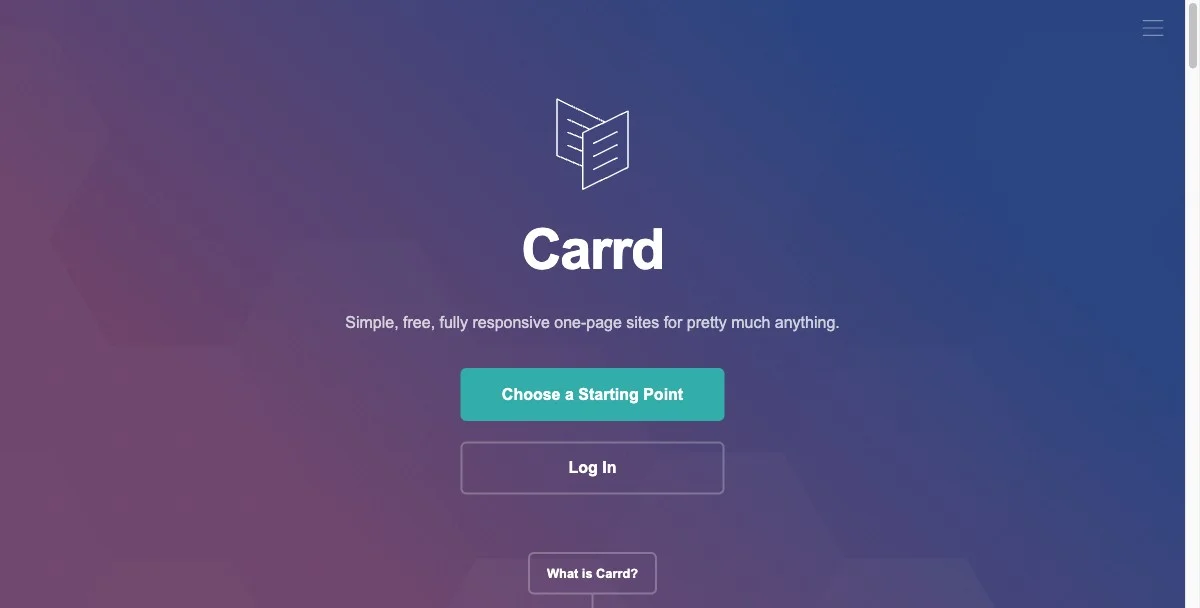
Carrd: The Fastest Path to a Working Validation Page
Carrd is the default recommendation in the indie hacker community for validation landing pages, and its pricing is what makes it the right starting point for most solopreneurs.
The free tier lets you build up to three sites on Carrd subdomains with access to the core builder. It does not include a custom domain or native form submissions. You connect an external form tool like Tally or Typeform for email capture. The Pro Lite plan, priced at $19 per year according to Carrd’s pricing page, adds custom domains, native form submissions, and more site slots. That is the lowest cost path to a fully connected validation page in this category.
The workflow is direct. Pick a template. Write a headline that names the problem and the outcome you are promising. Add a Tally or Typeform embed for email capture. Publish. Share the link where your target audience spends time.
What Carrd tests: whether your framing attracts the right audience and whether that audience will take a low-commitment action. A landing page with no signups is not proof the idea is bad. It may mean the framing missed, the traffic source was wrong, or the headline was not specific enough. Treat it as the beginning of the test loop, not the final verdict.
What Carrd does not do: it does not handle payments natively. For pre-sale tests where you want someone to put a credit card in, you would connect a Gumroad or Stripe link as a separate CTA. The design ceiling is low by intention, which can be useful if you are prone to over-investing in aesthetics at the expense of getting something live.
Who this is for: Solopreneurs validating a SaaS concept, digital product, or course idea where the test is whether the framing attracts the right people. If you have never built a validation page before, Carrd is where to start.
Framer: When Your Audience Cares About Design Quality
Framer started as a design prototyping tool and has since become a full website builder with a meaningful free tier. For validation, it offers significantly more visual flexibility than Carrd at the cost of a longer setup time.
The free plan includes up to 1,000 pages and access to the full builder, but does not include a custom domain (per Framer’s pricing page). Your page publishes on a Framer subdomain with Framer branding in the footer. Removing the branding and connecting a custom domain requires upgrading to a paid plan. The Basic plan starts at $10 per month, billed annually.
For most validation use cases, the free plan is enough to run a first test. The question you are trying to answer is whether the audience responds to the framing, not whether the URL is your own domain.
Framer’s template marketplace includes layouts built for product launches and coming soon pages. Those are the relevant starting points for validation. The editor offers drag-and-drop control over spacing, typography, and layout that goes beyond what Carrd provides.
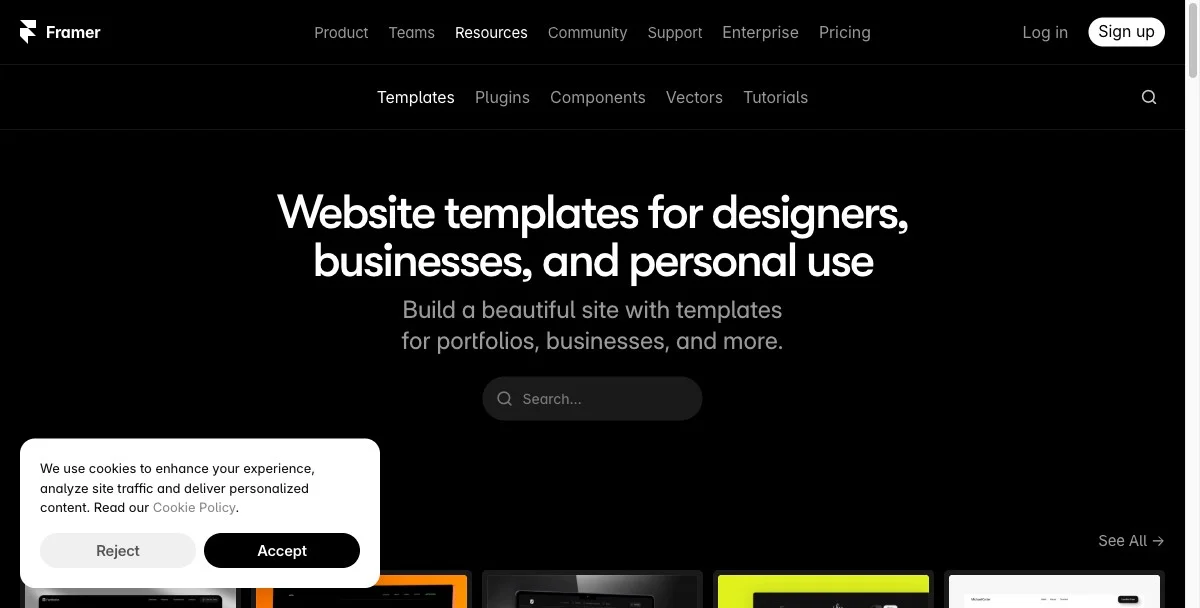
The reason to choose Framer over Carrd is specific: your audience makes quality judgments based on visual presentation. Design tools, creative services, premium software, any product category where the buyer’s instinct is to evaluate the product by how the marketing looks. With those audiences, a Carrd page may produce a false negative, where the idea is sound but the page undersells it.
The counterpoint worth naming: if you build a polished Framer page and the actual product will not look this polished, you are testing a different hypothesis than the one you think you are testing. The page should represent what you are building, not an aspirational version of it.
Who this is for: Solopreneurs with design-sensitive audiences, particularly creators, designers, or anyone marketing to buyers who judge quality on first impression.
Kit: For Validation That Starts With an Email Relationship
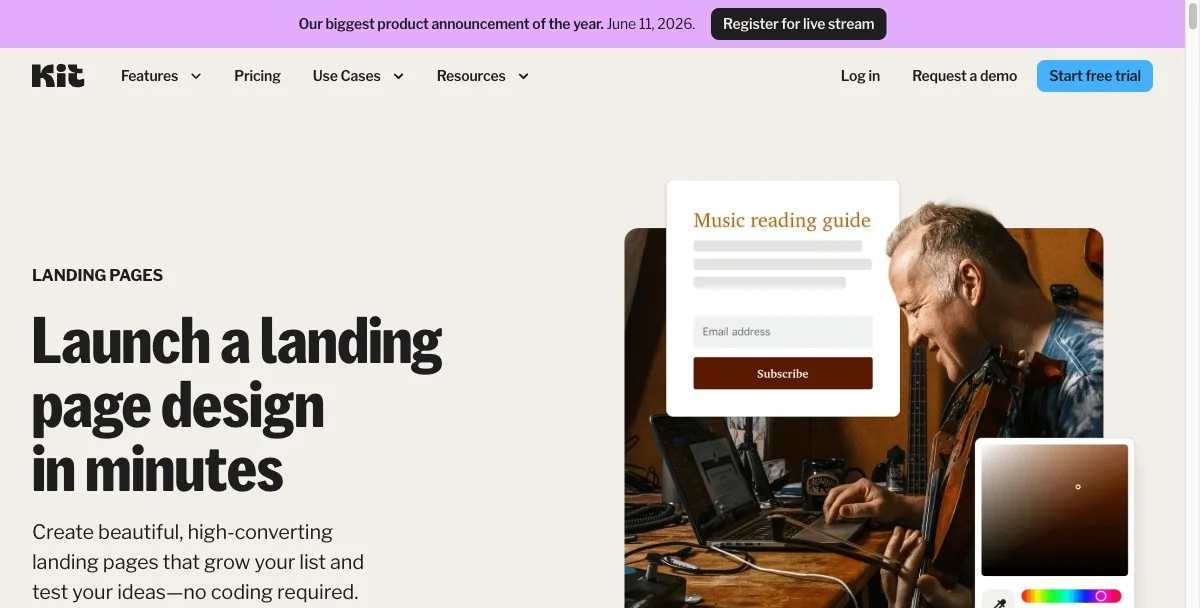
Kit (formerly ConvertKit) is an email marketing platform with a landing page builder included. For a specific type of validation (building a waitlist for something you have not yet built) it combines the page and the email relationship in one tool.
The free plan includes unlimited landing pages, email forms, and a yourname.kit.com subdomain (per Kit’s features page). The subscriber limit on the free plan is 1,000 contacts. You can connect a custom domain you already own on the free plan. For most early-stage validation, the free tier covers the full workflow.
The landing page builder is more constrained than Carrd or Framer. The templates are email-capture instruments first. You will not find the design flexibility of Framer here, and the customization ceiling is lower than Carrd’s. If you need to present a multi-section value proposition with embedded media, Kit is not the right fit.
Where Kit separates from the others: it connects your landing page directly to an email sequence. Someone signs up for your waitlist and your first email goes out automatically, timed the way you configured it. You are not just collecting addresses. You are starting a conversation with the people who were interested enough to say yes.
This matters for a specific type of validation. If you are testing whether a market exists for a newsletter, community, productized service, or membership offering, the quality of the relationship after signup is part of the signal. Someone who opens your first three emails and clicks through is a different data point than someone who signed up and never engaged. Kit makes it easier to measure that second signal without switching tools.
Who this is for: Service providers, coaches, and consultants testing whether an audience exists for a newsletter, community, or productized service, where the email relationship is core to what you are building.
Tool Comparison at a Glance
| Tool | Free tier | Custom domain (free) | Email capture | Estimated setup |
|---|---|---|---|---|
| Carrd | Yes, up to 3 sites | No (paid, $19/yr) | Via embed (Tally, Typeform) | 1 to 2 hours |
| Framer | Yes, up to 1,000 pages | No (paid, from $10/mo) | Built-in | 2 to 4 hours |
| Kit | Yes, up to 1,000 subscribers | Yes (own domain) | Built-in, with automation | 1 to 2 hours |
Pricing per each tool’s published pricing page as of May 2026.
What Landing Pages Can and Cannot Prove
Understanding what these tools actually measure is more important than picking the right one.
What works in favor of landing page validation:
- You get a real count, not a guess. Someone either gives you their email or they do not. That number is concrete, even if it is small and even if you are not sure how to read it yet.
- The constraint forces clarity. One page, one headline, one call to action. Writing it forces you to articulate what you are building and who it is for. Many ideas do not survive this exercise, and that is the point.
- You build an asset while you test. An email list of people who responded to your framing is a real asset. It follows you whether the first version of the idea works or not.
What misleads you:
- Signups are not purchase intent. Someone who gives you their email to “stay updated” has not committed to paying. A waitlist with 200 names is encouraging. It is not a pre-sale result. Do not treat it as one.
- Traffic source changes everything. A high signup rate from your existing online audience is not validation. Your followers will support you regardless of idea quality. Cold traffic, from Reddit, a forum, a targeted ad, or outreach to strangers, is the accurate test.
For a structured way to evaluate the idea before you build the page, see the idea validation scorecard.
Which Builder to Use
Start with Carrd if you want the fastest path from idea to live page. The free tier is enough to run a first test. The $19/year Pro plan is the cheapest path to a custom domain and native form submissions if you need them.
Choose Framer if your audience cares about design quality and a Carrd page would undersell the product. The free plan is sufficient for a validation test.
Choose Kit if you are testing a content-led product (newsletter, community, course, service) and you want the email sequence to start automatically at signup. The free plan covers the full validation workflow including automation.
One thing all three tools have in common: they get out of your way. The bottleneck in validation is almost never the tool. It is the decision to send the link somewhere real and see what happens.
Do not spend more than a weekend building the page. The page is a measurement instrument, not the product. Get it live. Get traffic to it. Make decisions based on what you observe.
If you are not sure what to measure or how to read the results, No-Code Validation Tools: What Each One Actually Tests covers the full signal hierarchy across tool types. For running a structured demand test using these tools as the mechanism, see How to Run a Demand Test in One Weekend.
Frequently Asked Questions
Can a landing page validate a business idea before I build the product?
A landing page can validate whether your framing attracts the right audience and whether that audience will take a low-commitment action, like signing up for a waitlist. It cannot validate whether people will pay. That requires a higher-stakes test, like a pre-sale or pre-order. Use a landing page as the first filter, not the final proof.
Do I need a custom domain for a validation landing page?
No. A Carrd subdomain or a Framer subdomain works for a first validation test. The purpose is to measure interest, not to project permanence. If the test succeeds and you want to build trust with early subscribers, registering the domain is worth the cost at that point, not before.
What should my validation landing page say?
Three things: who this is for, what outcome it produces, and one specific action they can take. Do not describe features. Do not explain how it works. Write the headline as if you are answering the question “what does this do and for whom?” The form or button has one purpose: collect an email or send someone to a payment page.
Why does the traffic source matter so much for a landing page test?
Because your existing audience responds to you, not to the idea. If you send a validation page to your newsletter or social followers and get a high signup rate, you have learned that people who already trust you will give you their email. That is not the same as a stranger evaluating whether the value proposition is strong enough to act on. Cold traffic is the honest test.
Keep Reading
What to Do Next
Choose the path that fits where you are right now.
Get the 7-Day Idea Test (Free)
Download the free 7-Day Idea Test. One task per day. Four evidence signals. One clear go, wait, or kill result — before you spend months building the wrong thing.
Send Me the PlaybookStart Reading
Read the step-by-step setup guide for your platform.